
AI Assets
PRESS London
With Meta's Andromeda update, creative velocity and diversity is more important than ever. Can 25 AI-generated static ads outperform 5 traditional, manually designed creatives within ASC? We collaborated with SeedStudios to find out. Over a four-week test, we saw that the AI-made statics significantly reduced costs, delivering a 31% lower cost per initiate checkout (£22 vs £32) and a 17% lower CPA (£34 vs £41), while also achieving higher CTRs and cheaper CPMs.
CPA
-17%
CTR
43%
CPC
-43%

Aout PRESS London
THE BACKGROUND
As paid social platforms increasingly reward creative volume and variation, brands are under pressure to produce more assets at greater speed - without sacrificing performance or brand consistency. We explored how AI could be embedded into the creative development process to unlock greater scale and efficiency within Meta’s Advantage+ Shopping Campaigns. Rather than relying solely on a limited set of manually designed static ads, this test investigated whether AI-generated statics (built from a structured messaging framework and product inputs) could outperform traditional creative approaches on cost efficiency and conversion-driving metrics.


THE CHALLENGE
The key challenge was determining whether quantity and variation could outperform manual craft. PRESS needed a way to increase creative velocity while maintaining brand integrity, all while driving a lower CPAs in ASC. Traditional static production limited scale, slowed testing cycles, and constrained the algorithm’s ability to find winning combinations. We set out to validate whether AI-generated statics could deliver stronger performance while reducing production friction for creative teams.

OUR APPROACH
First, we built a comprehensive messaging framework for the brand, identifying core propositions, buying drivers, messaging angles, and USP callouts. This framework ensured that all AI outputs remained grounded in strategic intent.
Next, we collaborated with the top AI-led creative agency Seed. Relevant prompts were fed into the AI, including an introduction to the offering, brand guidelines, 360-degree product imagery, the messaging framework, and examples of previous top-performing assets and concepts.
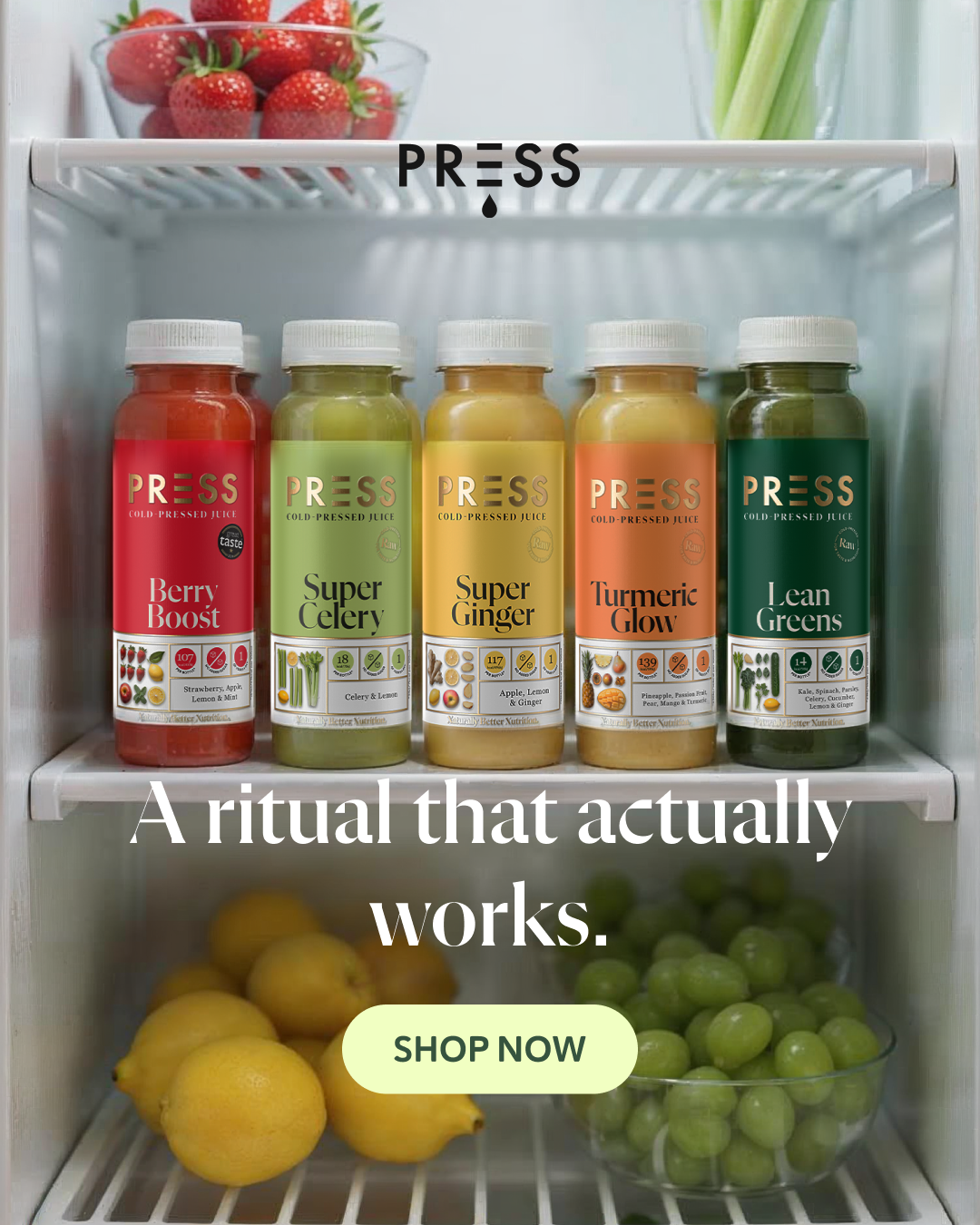
The AI was then prompted to ideate and produce static concepts across each section of the framework, delivering end-to-end outputs including concept ideas, copy, messaging, and visual executions.
Finally, a human QA layer ensured all assets met brand guidelines, with creative teams refining imagery or copy where required to finalise production-ready statics.


THE RESULTS
The test ran over a 4-week period, running as an A/B to compare 25 AI-generated statics against the 5 manually designed statics. Both cells were allocated equal spend (£2.1k each), optimised for purchases, with cost per initiate checkout as the primary success metric.
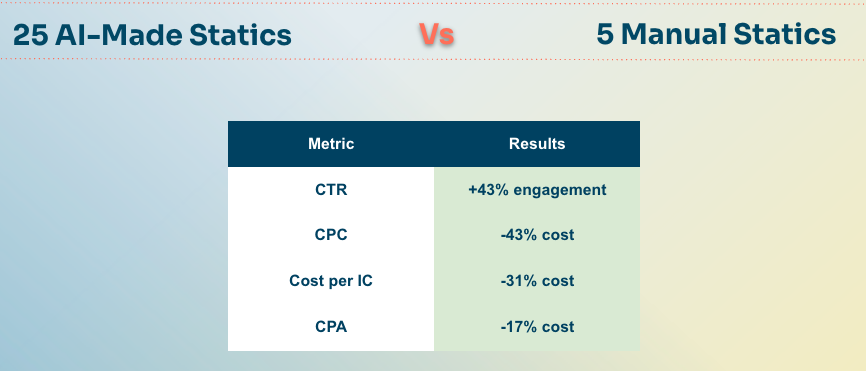
AI-generated statics delivered clear efficiency gains at scale. The increased creative volume and variation enabled the algorithm to reach a broader audience at lower CPMs (£4.50 vs £5.50). They drove a stronger CTR (+43%), and significantly cheaper media costs, including a 31% lower cost per initiate checkout (£22 vs £32) and a 17% lower CPA (£34 vs £41).
The results reinforce the value of structured AI-led creative production: wider creative variety feeds the algorithm more effectively, reduces costs, and frees creative teams to focus on higher-impact conceptual and strategic work.
CPA
-17%
CTR
43%
CPC
-43%
MORE CLIENT SUCCESS STORIES

Heading
PLENISH
REVENUE GROWTH YOY
30%
REDUCED CAC
-40%


